
The Caged Primate Problem
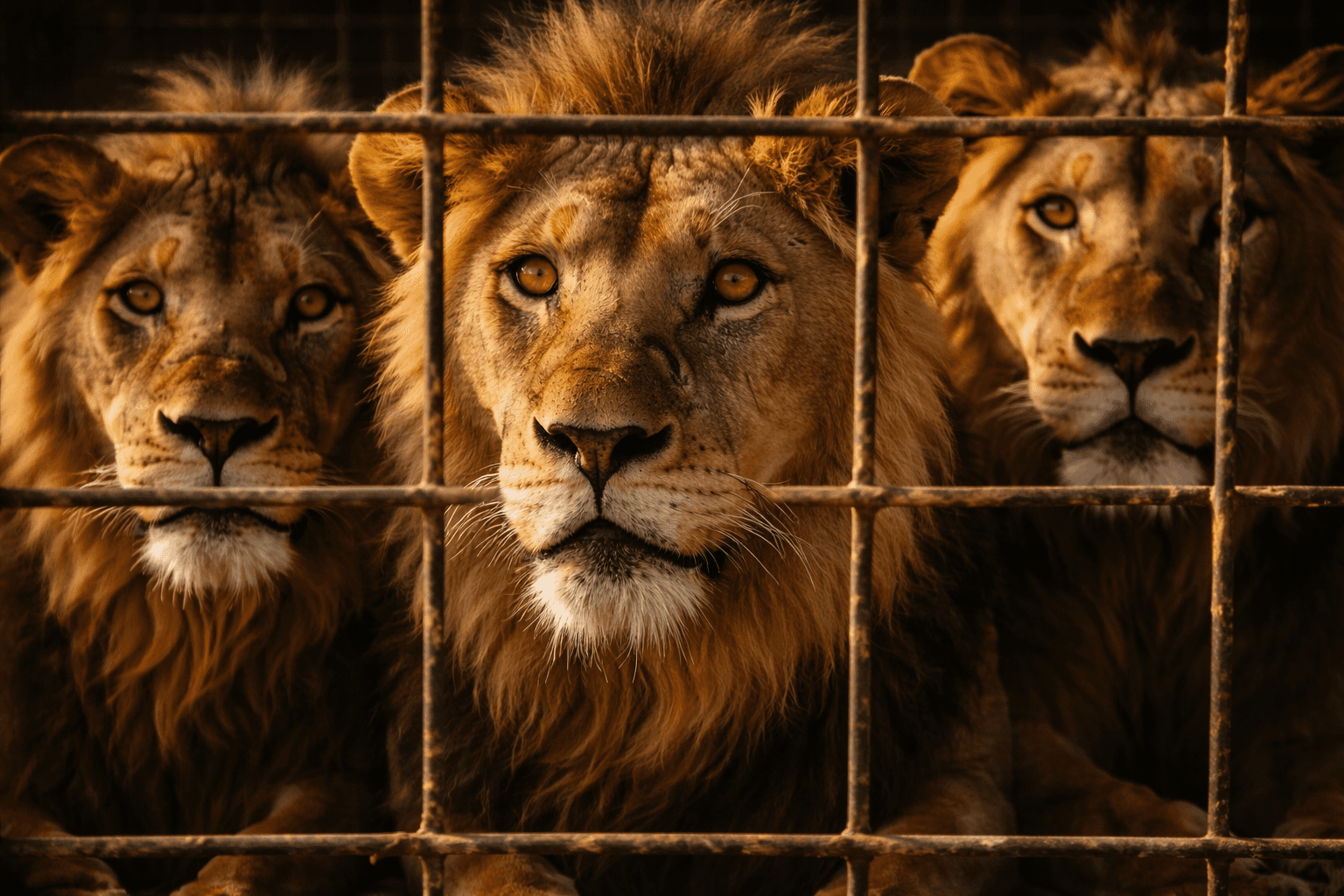
The Caged Primate Problem
Why the mental health system can’t fix what modern life is breaking
By Clare Rowe - Head of Clinical Growth & Partnerships at Malu Health
There is a thought that has been sitting at the back of my mind for a few years now.
Every time I hear that the mental health system is “broken.”
Every time another funding announcement is made.
Every time waiting lists grow longer and we call for more clinicians.
What if the system isn’t the core problem?
What if we are asking psychologists to treat symptoms of a civilisation that has moved faster than human evolution can keep up with?
We talk as if mental illness is expanding because services are insufficient. But I’m increasingly unsure that capacity is the main issue. I wonder whether we are mistaking environmental mismatch for individual pathology.
Biologically, we are not modern creatures. We are primates whose nervous systems were shaped over hundreds of thousands of years in small, stable groups. Anthropologist Robin Dunbar famously proposed that humans are cognitively wired to maintain roughly 150 meaningful social relationships - not thousands of followers, not infinite digital exposure, not algorithmically mediated contact.¹
For most of human history, we woke with the sun, we moved our bodies constantly and we lived in close proximity to kin. Threats were concrete and immediate - a predator, a rival tribe, a storm. When the threat passed, the nervous system settled.
And then, in less than a century, everything changed.
Urbanisation.
Mass media.
The internet.
Smartphones.
Social media.
Artificial intelligence.
We all have an understanding and empathy for the behaviour of a caged animal… rarely examining our own modern cage.
Evolution did not redesign the human stress response in the meantime and now we are running ancient hardware in a radically new operating system.
There is an analogy we all intuitively accept. That is, when wild animals are removed from their natural habitat and placed in artificial enclosures, they deteriorate. We see them pacing, ruminating and developing repetitive behaviours. They sometimes self-harm. No one looks at a pacing tiger in a zoo and concludes the tiger has a serotonin deficiency because we understand that something about the environment is wrong.
Yet when humans pace the metaphorical cage by doom-scrolling, withdrawing, catastrophising, losing sleep over abstract threats, we immediately medicalise it.
That means we prescribe, we refer and we expand services.
Now, I am not arguing against therapy. I am a psychologist. I see every day how treatment can relieve suffering and build resilience. But therapy operates downstream by helping individuals cope inside the enclosure - it doesn’t redesign it.
Modern life increasingly looks like what evolutionary psychologists call a “mismatch environment” - conditions that diverge sharply from those our brains evolved to handle. The rise in anxiety and depressive symptoms among adolescents in the smartphone era is not mysterious. Jonathan Haidt’s work has drawn attention to the correlation between the rapid uptake of social media after 2012 and the spike in internalising disorders in young people.² We may debate the degree of causality, but the pattern is hard to ignore.
Our ancestors worried about predators and food scarcity. Today we worry about planetary collapse, global instability, online reputation, and ideological conflict - often before we have finished primary school.
The human threat-detection system does not differentiate particularly well between immediate danger and abstract, long-term risk. When the alarm is activated repeatedly without resolution, chronic anxiety becomes almost inevitable.
Add to this the quiet erosion of embodied community. We have fewer extended family networks, later marriage, lower fertility and less religious and civic participation. There are more people living alone and increasingly more communication mediated through screens rather than physical presence. A nervous system is calmed by proximity to another regulated nervous system, not by pixels.
Then there is the rise of frictionless living. Increasingly, even intimacy can be outsourced through AI companions, on-demand entertainment and algorithmically curated validation. In these artificial environments there is no negotiation, no rejection and importantly no repair. But resilience is built in friction - in misunderstanding, conflict, compromise, and reconciliation. A primate that never has to work through social tension does not develop robust social muscles.
So we find ourselves in a strange position. The mental health workforce continues to expand,governments invest billions, and corporations roll out wellbeing initiatives. And yet demand does not recede.
This is not because clinicians are failing. It is because we are attempting to treat environmental strain with individual intervention but if the enclosure remains hyper-digital, socially fragmented, and saturated with abstract threat, psychologists will remain busy.
Very busy.
Could it be that the mental health system is functioning exactly as it would be expected to inside a culture that is structurally dysregulating? Perhaps the better question is not simply, “How do we increase access to services?” Perhaps it is, “How do we make the human habitat less psychologically hostile?”
Strengthening families. Protecting childhood from premature exposure to adult anxieties. Rebuilding embodied community. Reducing screen dependency. Restoring contact with nature. Reintroducing ordinary friction into development rather than eliminating it.
In other words: redesigning the enclosure. But I get it - that is a mammoth task, and ironically perhaps all we have to work with is the individual, breaking free of the cage one by one.
Because caged primates pace, and we are not as evolved as we like to think.
